The braided torus links motif looks like tiny ropes looped into rings — a texture with real depth and rhythm. This collection of five crochet blanket concepts takes that interlaced structure through five layouts, from hexagon motifs to a tasseled throw. All images are AI-generated concept illustrations for inspiration, not photos of finished handmade pieces.
What unites the five blankets is the raised, rope-like link texture; what separates them is architecture — modular hexagons, stacked panels, a framed border, an oval field and a fringed edge. Compare how the same stitch idea behaves when the outline of the blanket changes.
Aubergine hexagon torus blanket
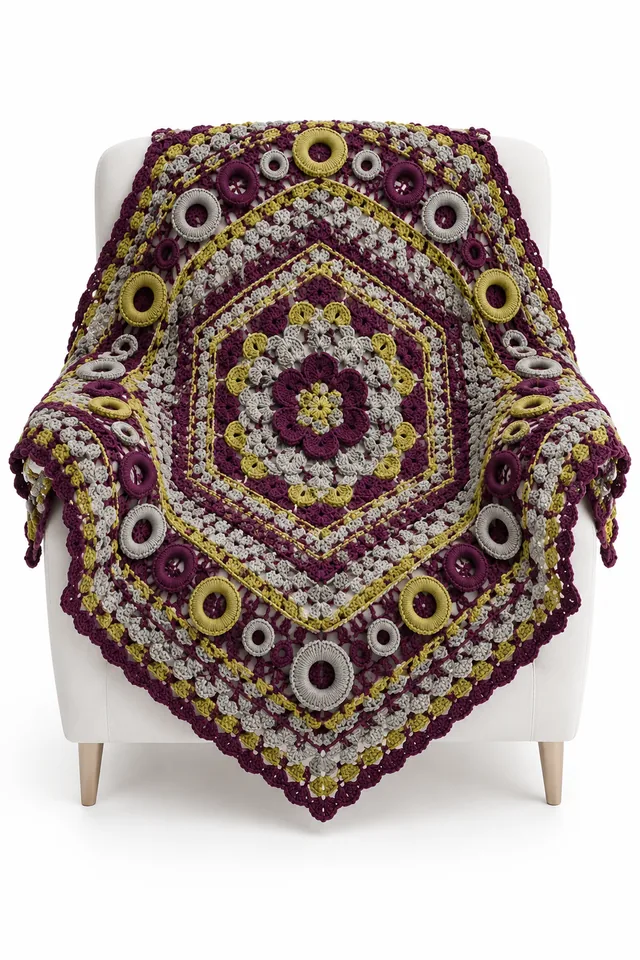
The aubergine hexagon blanket is the most modular concept of the five. Each hexagon carries the braided torus ring at its center, and the deep purple ground makes the raised links read like carved rope. Joined together, the motifs form a honeycomb that feels both geometric and soft.
A single-color scheme keeps the attention on texture rather than color changes. Aubergine is a strong choice for that: dark enough to cast shadows inside every braid, warm enough to feel welcoming on a sofa or bed.
For a mood board, this design shows how repetition turns a small motif into a statement. One hexagon is a coaster idea; forty hexagons become an heirloom-looking throw. Scale is the whole story here.
Compared with the panel throw in this set, the hexagon version feels handcrafted and assembled, while the panels feel planned and architectural. Both use the same torus link — the layout alone changes the personality. Remember, this is an AI concept image, not a pattern.
Cinnamon panel torus throw
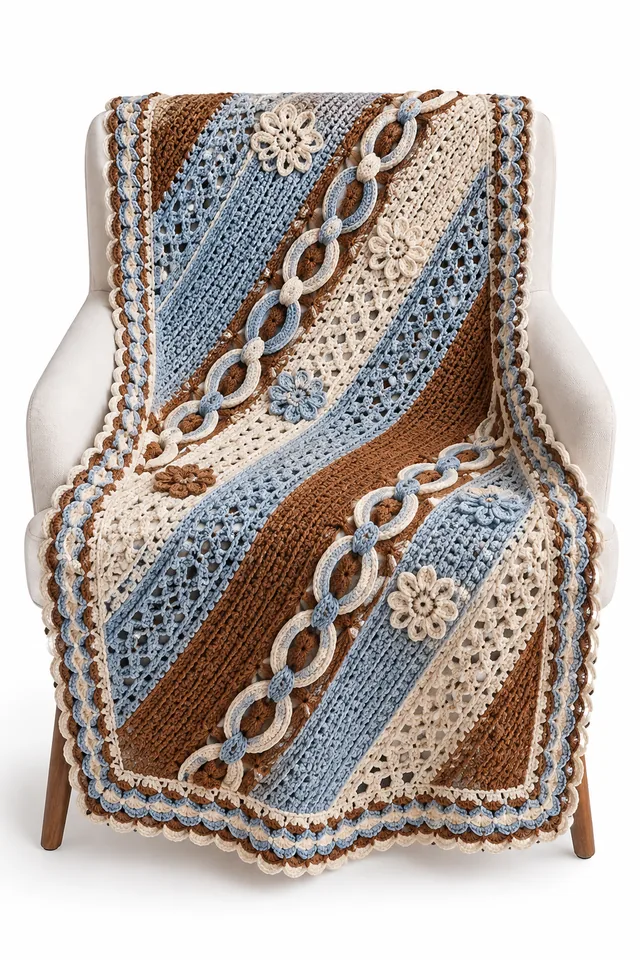
Vertical panels give this cinnamon throw a tailored, almost woven look. Each band carries a column of torus links, and the spaces between panels act as breathing room, so the rich texture never overwhelms the eye.
Cinnamon is a clever color for braided texture: the warm mid-tone highlights the shadows inside each link without the harsh contrast a pale yarn would create. The whole throw reads autumnal and calm.
For a mood board, notice how the panel layout flatters draping. Folded over an armrest, the columns line up like pleats, and the throw looks intentional even when casually tossed. Structure does the styling work for you.
Set beside the hexagon blanket, this one is the quiet organizer of the family — same braid, stricter grid. If your taste runs to order over patchwork, the panel version is the reference to pin. As always, an AI concept for inspiration only.
Mulberry border torus throw
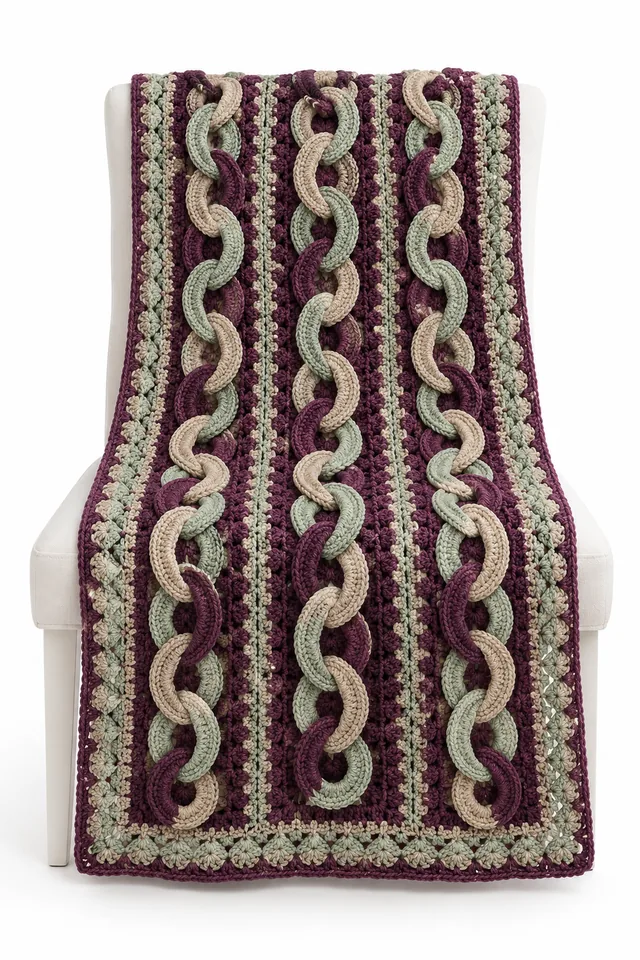
The mulberry throw puts the braided torus links where they frame best: at the edges. A dense border of interlaced rings surrounds a calm, open center, like a picture frame around quiet fabric. The berry tone makes the frame feel luxurious.
This layout is a lesson in restraint. The center stays smooth, which lets the eye rest and makes the border look even richer by contrast. It is the most formal-looking concept of the five.
For a mood board, the bordered approach suits blankets meant to be seen flat — on a bed, the frame sits at the mattress edge and reads like bedding from a boutique hotel. Placement is part of the design.
Against the all-over hexagon version, this throw whispers where the other sings. One fills the whole field with texture; the other saves it for the perimeter. Two valid answers to the same stitch. This remains an AI-generated concept, no instructions included.
Petrol blue oval torus blanket
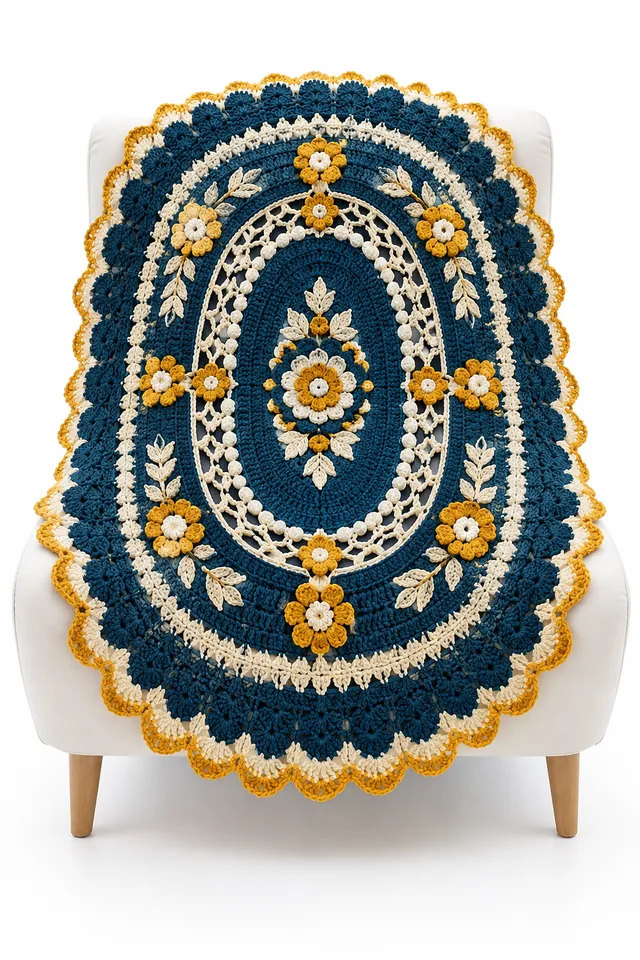
An oval blanket changes everything about how texture flows. Here the braided torus links radiate outward from the center in petrol blue, following the curve like ripples on dark water. The shape feels organic and a little unexpected.
Petrol blue is the moodiest color in the set, and it suits the radiating layout: the links near the center sit tight and dense, then relax toward the rim, and the deep shade keeps the whole piece cohesive.
For a mood board, an oval throw drapes differently than a rectangle — it puddles softly and never shows a hard corner. On a round chair or at the foot of a bed, that softness reads as pure comfort.
Compared with the bordered throw, the oval version is all movement and no frame. If the bordered one is a framed picture, this one is a pond. Two moods from one braided stitch. AI concept image, inspiration only.
Pine green tassel torus blanket
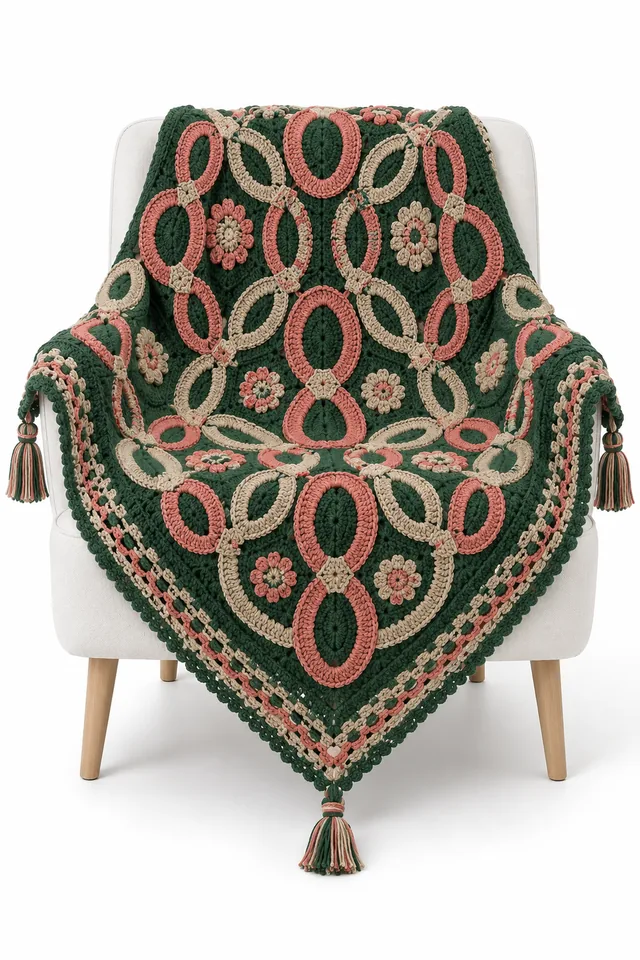
The pine green blanket finishes its braided field with a generous tassel fringe, and the combination feels like a forest floor meeting a harvest festival. The torus links cover the body in even rows, then the tassels take over at the edge.
Deep green flatters rope-like texture because the shadows inside the braids look natural, like vines overlapping. The tassels add a second, looser texture that swings when the blanket moves.
For a mood board, fringe changes how a blanket ages visually: it hides the edge wear that plain hems show, and it makes the piece look relaxed rather than precious. A good reference for everyday throws.
Against the formal bordered throw, this is the casual sibling — same braid family, looser manners. Choose the frame for polish, the fringe for ease. As with every image here, treat it as an AI concept, not a finished piece.
One braid, five personalities
All five blankets share a single idea — braided torus links — yet the layout turns it into five different moods: modular, paneled, framed, radiating and fringed. That is the real lesson of this collection: texture is only half of a blanket's character, and composition is the other half.
These are AI-generated concept images made for inspiration. They are not photographs of finished crochet and do not come with patterns or instructions. Let them guide your color and layout choices, then make the idea your own.
Read how we present crochet inspiration or send a suggestion or correction.